The sun beats down, the air shimmers with heat, and the water feels like a warm bath – welcome to summer, a season often seen as challenging for bass anglers. While it’s true that the high temperatures can make bass fishing tricky, it’s also a time of incredible opportunity if you know where to look and what to throw. Mastering summer bass fishing isn’t about giving up; it’s about adapting. Forget what you know about spring and fall patterns; summer demands a new approach. This guide will dive deep into the world of warm-water bass, equipping you with the knowledge, tips, and techniques to turn those scorching summer days into productive fishing expeditions.
Understanding Summer Bass Behavior
Summer’s heat profoundly impacts bass. Their metabolism speeds up, but they also become more selective about when and where they feed. Understanding these behavioral shifts is the first step to consistent success.
The Thermocline Effect: Where Bass Go When It’s Hot
One of the most critical factors in summer is the thermocline. In deeper lakes, as the surface water warms, it becomes less dense than the cooler water below. This creates distinct layers: a warm, oxygen-rich upper layer (epilimnion), a transition zone with a rapid temperature drop (thermocline), and a cold, often oxygen-depleted bottom layer (hypolimnion). Bass, like most fish, are creatures of comfort and oxygen. They’ll often suspend near or just above the thermocline, finding that perfect balance of cooler water and available oxygen. Locating this invisible layer with your fishfinder is crucial for deep-water summer bass fishing.
Metabolism and Feeding Patterns
While their metabolism is high, bass become more efficient feeders in summer. They’ll often feed aggressively during short windows, typically at dawn, dusk, or overnight, and then retreat to cooler, darker, or deeper cover during the brightest parts of the day. This doesn’t mean they won’t bite during midday, but you’ll need to present your lure directly to them in their hiding spots.
Early Morning and Late Evening Bites
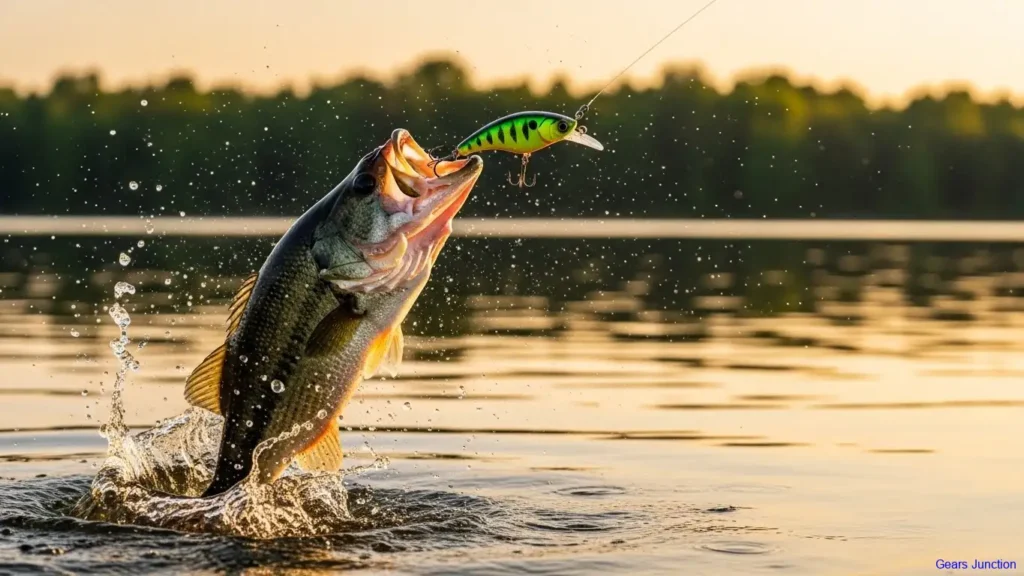
These are prime times for topwater action and shallow power fishing. As the sun rises or sets, the surface temperature is more comfortable, and bass will move up from deeper haunts to ambush baitfish. This is your window for exciting, explosive strikes.
Night Fishing for Bass
Don’t overlook the magic of night fishing! When the sun goes down, surface temperatures drop, and bass become far more active in shallower water. Topwater lures, large worms, and jigs worked slowly can be incredibly effective after dark, offering a peaceful and often highly productive alternative to daytime angling.
Top Lures for Summer Bass Fishing
Matching your lure to the bass’s mood and location is key. Here are the top performers for warm-water bass.
Soft Plastics: Worms, Jigs, and Creature Baits
Soft plastics are arguably the most versatile and effective lures for summer bass, especially when fished slowly and precisely in cover. Texas rigs, Carolina rigs, and weightless wacky worms are deadly when bass are holding tight to structure or aren’t actively chasing. Creature baits mimic crawfish or other aquatic organisms, making them irresistible when pitched into dense cover. Brands like Gary Yamamoto Custom Baits offer a vast array of shapes and colors perfect for summer applications.
Crankbaits and Spinnerbaits
- Deep-Diving Crankbaits: When bass are holding on ledges, humps, or points in 15-25 feet of water, a deep-diving crankbait is your best friend. Choose colors that mimic local baitfish or crawfish. A fast retrieve often triggers reaction strikes.
- Mid-Depth Crankbaits: For bass in 8-15 feet, especially around brush piles or timber, a medium-diving crankbait can be highly effective.
- Spinnerbaits: While often thought of as a spring lure, spinnerbaits can still shine in summer, particularly in stained water or around sparse vegetation during low light conditions. Opt for larger blades and slower retrieves in warmer water.
Topwater Lures: Frogs, Poppers, Walkers
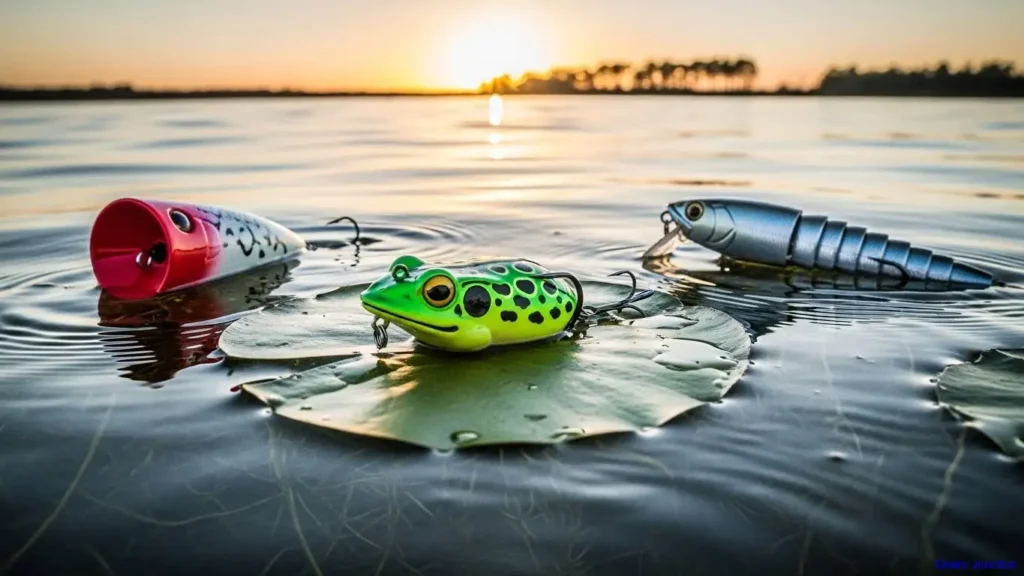
Nothing beats the thrill of a topwater strike! During low light periods (early morning, late evening, or overcast days) and at night, topwater lures are phenomenal. Frogs are excellent over heavy mats of lily pads or grass, while poppers and walking baits (like a Zara Spook) excel in open water or along edges. Always let the fish take the lure completely before setting the hook.
Jigs (Flipping and Pitching)
Flipping and pitching jigs into dense cover (docks, laydowns, heavy vegetation) is a highly productive technique for catching big summer bass. Use heavy braided line and a stout rod to extract fish from their hiding spots. A jig with a bulky trailer provides a substantial meal that opportunistic bass can’t resist.
Swimbaits
Both hard and soft swimbaits can be deadly for targeting larger bass that are keying in on bigger baitfish. Rig soft swimbaits on weighted swimbait hooks for open water or use them as trailers on underspins. Hard swimbaits offer a realistic profile and often elicit powerful strikes from trophy-sized bass.
Finding Productive Warm-Water Bass Locations
Summer bass retreat to specific areas to escape the heat and find food. Knowing these hotspots is crucial.
Deep Water Structure: Ledges, Humps, Brush Piles
This is classic summer bass territory. Bass will gang up on deep ledges, humps, and points where they can ambush baitfish migrating through deeper water. Brush piles and submerged timber offer crucial shade and ambush points. Use your electronics to locate these features and any baitfish concentrated around them.
Shade and Cover: Docks, Overhanging Trees, Lily Pads
Shade is a bass’s best friend in summer. Docks, especially those with deep water nearby, provide overhead cover. Overhanging trees create shadows where bass can wait. Lily pad fields offer both shade and excellent ambush cover for lurking bass. Target the darkest parts of the shade.
Current Areas: River Bends, Dam Tailwaters
In rivers and reservoirs with current, bass will position themselves in areas where the current brings food to them without expending too much energy. Look for eddies, current breaks behind rocks or logs, and the tailwaters below dams where the water is often cooler and more oxygenated. The National Park Service often provides information on fishing access in areas with flowing water.
Aquatic Vegetation: Hydrilla, Milfoil
Thick mats of hydrilla, milfoil, and other aquatic vegetation provide shade, oxygen, and a haven for baitfish and crawfish. Bass will burrow into these mats, so punching through with heavy jigs or fishing frogs over the top can be incredibly effective. Look for distinct edges or holes in the vegetation.
Schools of Baitfish
Where there’s bait, there are bass. Use your sonar to find schools of shad, minnows, or other forage. Bass will often be lurking just below or to the side of these schools, waiting for an opportunity. Trolling crankbaits or casting swimbaits through these areas can be highly productive.
Advanced Techniques for Summer Bass
Taking your summer bass fishing to the next level requires refining your techniques.
Deep Cranking and Trolling
Once you’ve located a deep ledge or hump with your electronics, deep cranking is the way to go. Make long casts, allowing your crankbait to dig into the bottom. Experiment with retrieve speeds and pauses. In very large bodies of water, trolling deep-diving crankbaits can also be an efficient way to cover water and find active bass.
Flipping and Pitching Heavy Cover
Precision is key here. Use a heavy-action rod, a high-speed baitcasting reel, and strong braided line. Present your jig or creature bait as quietly as possible into the densest parts of cover. Let it sink, jiggle it a few times, then retrieve and repeat. The strike often feels like a subtle ‘thump.’
Drop Shotting for Finicky Bass
When bass are lethargic or highly pressured, a drop shot rig can be a game-changer. This technique presents a small soft plastic bait tantalizingly in front of the bass, often above the bottom. It’s incredibly effective for bass suspended near the thermocline or holding tight to vertical structure. The presentation is subtle, and the bite can be very light.
Slow Presentations vs. Reaction Bites
Summer bass can be either. Sometimes, a slow, methodical presentation of a Texas-rigged worm or a jig is what it takes to coax a bite from a reluctant bass. Other times, a fast-moving crankbait or a violent topwater pop will trigger an aggressive reaction strike from an otherwise inactive fish. Be prepared to switch between these approaches based on the bass’s mood.
Sonar and Mapping Essentials
Modern electronics are indispensable for summer bass fishing. Learn to interpret your sonar to identify thermoclines, baitfish schools, and subtle deep-water structures. GPS mapping helps you mark productive spots and navigate efficiently. Resources like Humminbird’s learning center can help you master your electronics.
Essential Gear for Summer Bass Fishing
Having the right tools makes a difference, especially when battling strong summer bass.
Rods and Reels
- Heavy-Action Baitcasting Rods: Essential for flipping and pitching heavy cover, paired with a high-speed reel (7.1:1 gear ratio or higher) for quick line pickup.
- Medium-Heavy to Heavy Crankbait Rods: A more moderate action is preferred for deep cranking, allowing the rod to load up and absorb the shock of a big fish.
- Spinning Rods: Ideal for drop shotting, wacky rigs, and finesse presentations with lighter lines.
Line Selection
- Braided Line: Excellent for flipping/pitching and topwater because of its strength and no-stretch properties. Use 30-65lb test.
- Fluorocarbon Line: Nearly invisible underwater, making it great for crankbaits, jigs, and finesse presentations where sensitivity and stealth are key. Use 10-20lb test.
- Monofilament Line: Best for topwater plugs where its buoyancy can be an advantage, and for certain reaction baits where some stretch is desired.
Sunglasses, Sun Protection, and Hydration
Don’t forget the essentials for yourself! Polarized sunglasses are non-negotiable for spotting fish and structure. Sunscreen, a wide-brimmed hat, and lightweight, long-sleeved clothing are crucial for protection. And always carry plenty of water to stay hydrated. Summer fishing can be grueling, so taking care of yourself is paramount.
Want to learn about Fly fishing. Here is the complete guide:
Conclusion: Embrace the Warm Water Challenge
Summer bass fishing, while demanding, offers some of the most rewarding experiences in angling. By understanding how bass react to warm water, choosing the right lures, meticulously targeting productive locations, and employing effective techniques, you can turn those hot summer days into memorable fishing adventures. It’s about adapting, observing, and experimenting. So, gear up, stay cool, and get ready to unlock the incredible potential of warm-water bass fishing. The challenge is real, but so are the rewards!
References
- Gary Yamamoto Custom Baits. “Welcome to the World of Yamamoto.” Retrieved from https://www.baits.com/
- National Park Service. “Find A Park.” Retrieved from https://www.nps.gov/index.htm
- Humminbird. “Fishing Articles & Tips.” Retrieved from https://www.humminbird.com/support/fishing-articles